


tandem-walzwerk-prozess
/Modern tandem cold rolling mill s represent the pinnacle of automated metal processing, where sophisticated control systems orchestrate every aspect of production with remarkable precision. These highly automated tandem mill cold rolling operations have transformed from manually-intensive processes to technological marvels where computer systems make split-second decisions that human operators could never match. The transition to full automation in tandem cold rolling mill s has enabled manufacturers to achieve unprecedented levels of product consistency, operational efficiency, and quality control while processing materials at speeds exceeding 2,500 meters per minute. The automation architecture in today's tandem cold metal rolling mill control systems typically follows a hierarchical structure with multiple layers of control. At the base level, programmable logic controllers (PLCs) manage individual equipment functions, while intermediate systems coordinate stand-level operations. The supervisory control and data acquisition (SCADA) system provides plant-wide oversight, integrating data from hundreds of sensors to optimize the entire production line. This multi-tiered approach allows tandem mill rolling operations to maintain micron-level thickness tolerances while adapting to changing material properties and process conditions in real time. Core Control Systems in Tandem Cold Rolling Mills The technological backbone of any tandem cold rolling mill consists of several specialized control systems working in perfect synchronization. The automatic gauge control (AGC) system maintains precise thickness by continuously adjusting roll gaps based on real-time thickness measurements. This critical subsystem works in conjunction with tension control loops that manage interstand stresses, and speed control systems that synchronize multiple stands to ensure smooth material flow. Together, these systems form an integrated tandem cold metal rolling mill control network that responds to process variations within milliseconds. Modern tandem mill cold rolling operations employ advanced control algorithms that go beyond traditional PID (proportional-integral-derivative) approaches. Adaptive control systems automatically tune their parameters based on changing process conditions, while model predictive control (MPC) uses mathematical models to anticipate and prevent quality deviations. Some cutting-edge installations now incorporate artificial intelligence elements that learn from historical data to optimize rolling parameters for specific product grades. These intelligent control strategies enable tandem cold rolling mill s to maintain tighter tolerances while reducing material waste and energy consumption. Tandem Cold Rolling Mills : Human-Machine Interface and Operator Control Stations While tandem cold rolling mill s operate with a high degree of autonomy, human oversight remains essential for optimal performance. Modern control rooms feature ergonomic operator stations with high-resolution displays presenting real-time process visualizations. These human-machine interfaces (HMIs) transform raw sensor data into intuitive graphical representations, allowing mill personnel to monitor multiple stands simultaneously. Advanced diagnostic screens help operators quickly identify and address any process deviations that may occur during tandem mill cold rolling operations. The latest generation of tandem cold metal rolling mill control systems incorporates augmented reality features that overlay critical process information onto video feeds of the mill. Operators can access detailed historical trends, predictive analytics, and maintenance information through touchscreen interfaces, enabling faster, more informed decision-making. Alarm management systems prioritize notifications based on severity, preventing information overload while ensuring important events receive immediate attention. These sophisticated interfaces bridge the gap between complex automation systems and human operators, creating a collaborative environment where both work together to maximize mill performance. Tandem Cold Rolling Mills : Integration with Plant-Wide Automation Systems Modern tandem cold rolling mill s don't operate in isolation but rather as integrated components of comprehensive manufacturing execution systems (MES). These plant-wide networks connect tandem mill rolling operations with upstream and downstream processes, creating a seamless production flow from raw material to finished product. The tandem cold metal rolling mill control system exchanges data with inventory management, quality assurance, and maintenance scheduling systems, enabling coordinated optimization across all operational areas. This integration extends beyond the physical plant through industrial Internet of Things (IIoT) technologies that connect mills with corporate ERP systems and supply chain networks. Real-time production data from tandem cold rolling mill s feeds into enterprise-level analytics platforms that identify opportunities for continuous improvement. Some manufacturers have implemented cloud-based monitoring systems that allow remote experts to assist with troubleshooting and optimization, reducing downtime and improving overall equipment effectiveness (OEE). This level of connectivity represents the future of tandem mill cold rolling operations, where data flows freely across organizational boundaries to drive operational excellence. Tandem Cold Rolling Mills : Advanced Process Optimization Techniques The automation systems in modern tandem cold rolling mill s employ sophisticated optimization algorithms that continuously seek the most efficient operating parameters. These systems analyze multiple variables simultaneously—including rolling speed, reduction ratios, tension levels, and lubrication conditions—to find the ideal balance between productivity, quality, and energy consumption. The tandem cold metal rolling mill control system can automatically adjust these parameters in response to changes in material properties or product specifications, maintaining optimal performance throughout production runs. Some of the most advanced tandem mill rolling operations now utilize artificial intelligence for predictive optimization. Machine learning algorithms analyze historical production data to identify patterns and correlations that human engineers might overlook. These intelligent systems can recommend rolling schedules that minimize energy use while meeting quality targets, or predict the optimal time for work roll changes to maximize productivity. As these AI models continue to learn from ongoing operations, their ability to optimize tandem cold rolling mill performance improves correspondingly, creating a virtuous cycle of continuous improvement.

We have successfully executed over 500
projects around the world,
many first-of-their-kind
research projects and products in China, including
We have successfully executed over 500
projects around the world,
many first-of-their-kind
research projects and products in China, including
-
2004
The 1st hydraulic AGC system for hot rolling of ribbon steel
-
2006
The 1st AFC system used for 1450mm skin pass mill
-
2009
The 1st 5-stand tandem line with 2-stand POR & Uncoiler for 650mm ribbon steel
-
2012
The 1st reversing mill for 1380mm strip
-
2016
The 1st soft-rolling system used in skin pass mill
-
2019
The 1st fully automated medium-width tandem cold rolling mill
-
2021
The 1st 5000KN Twin-stand double skin pass mill
-
2022
The 1st coupled pickling line & tandem cold mill with two modes - big roller & small roller
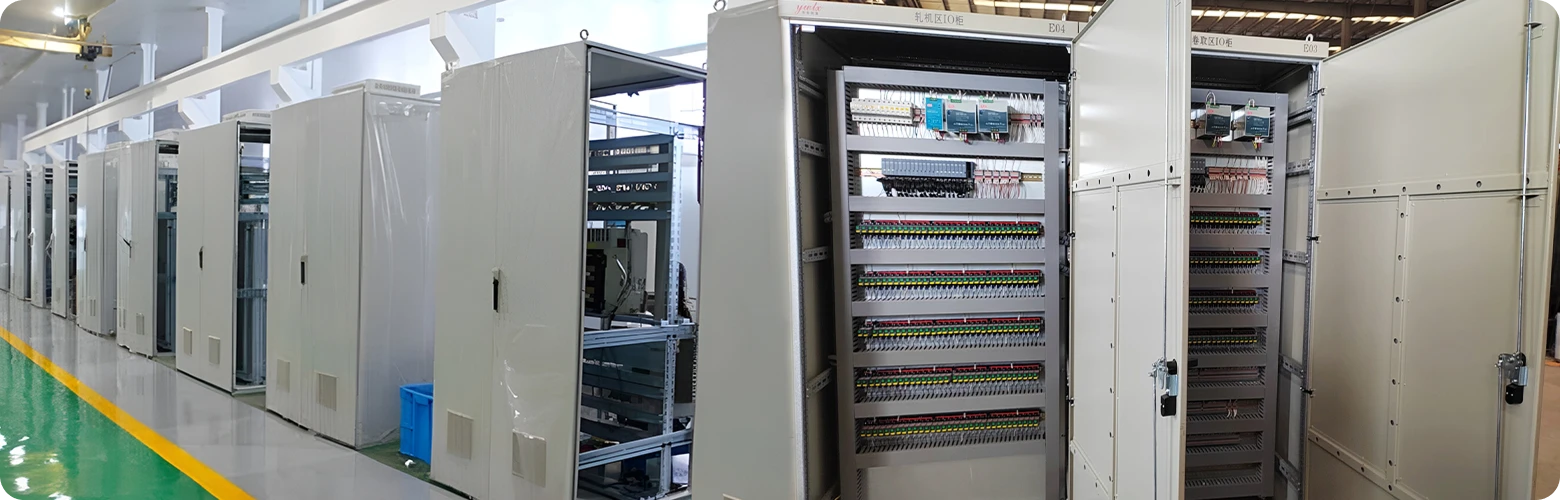

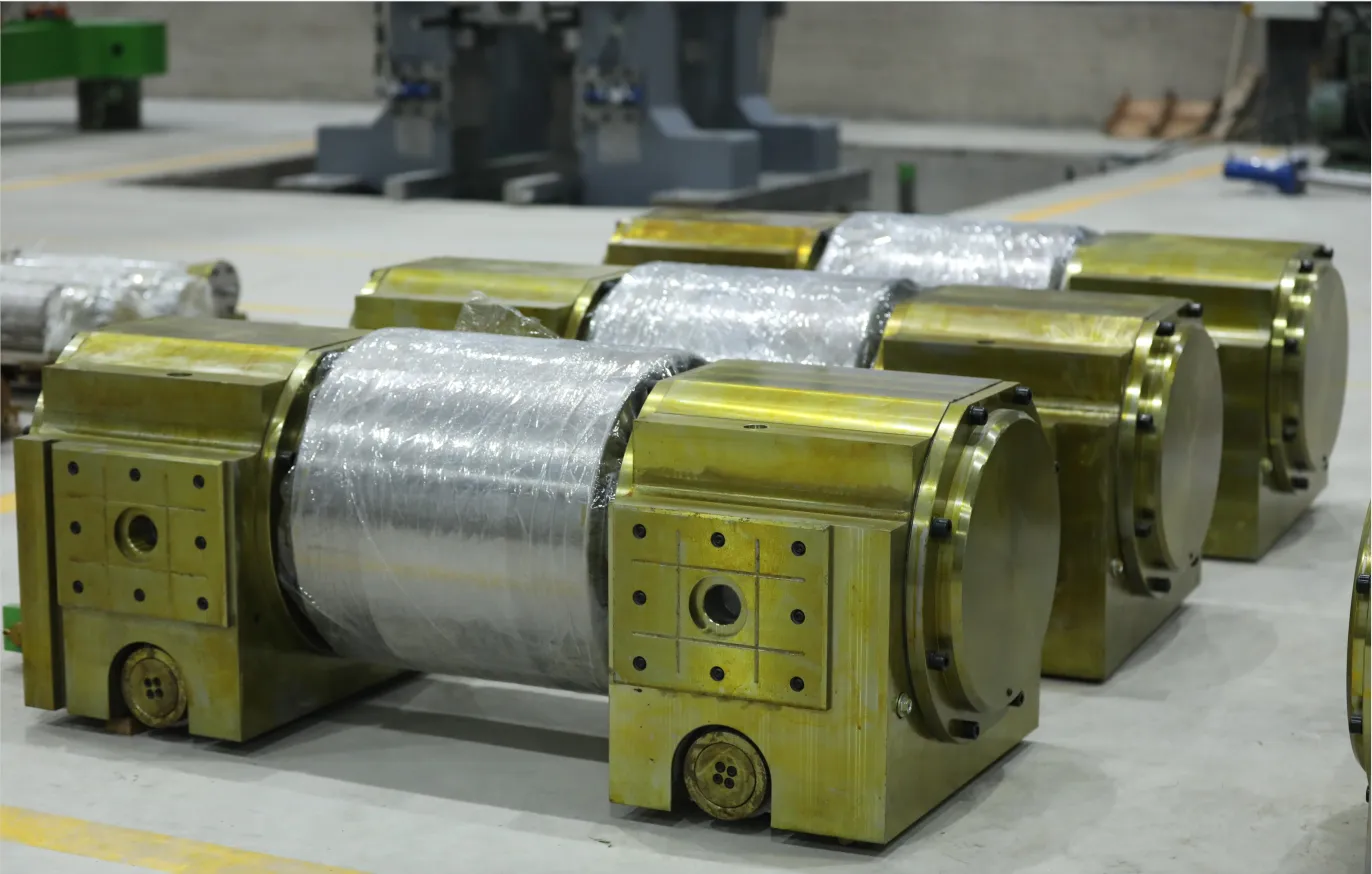
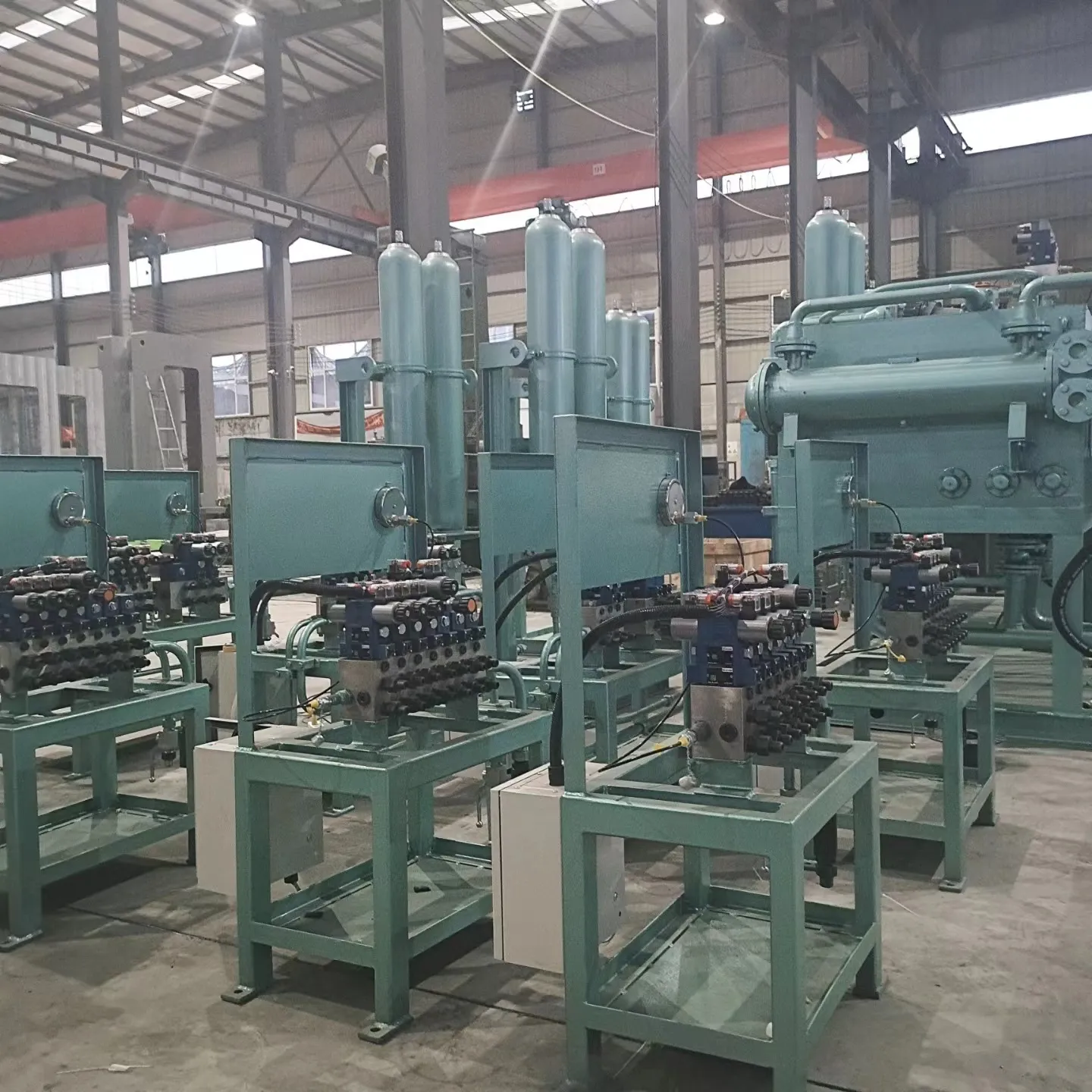
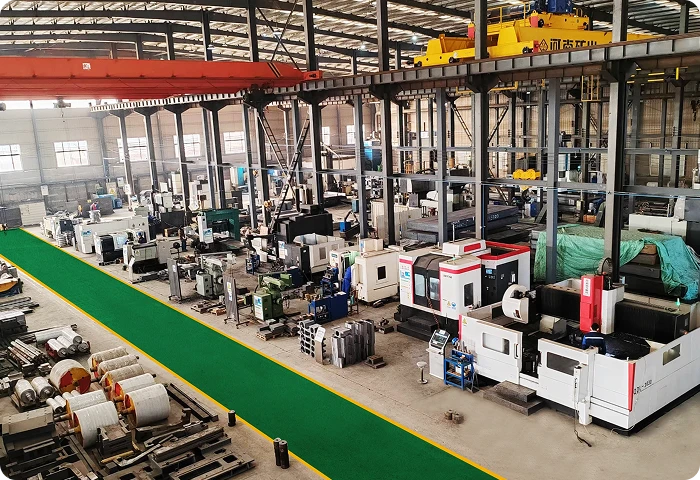
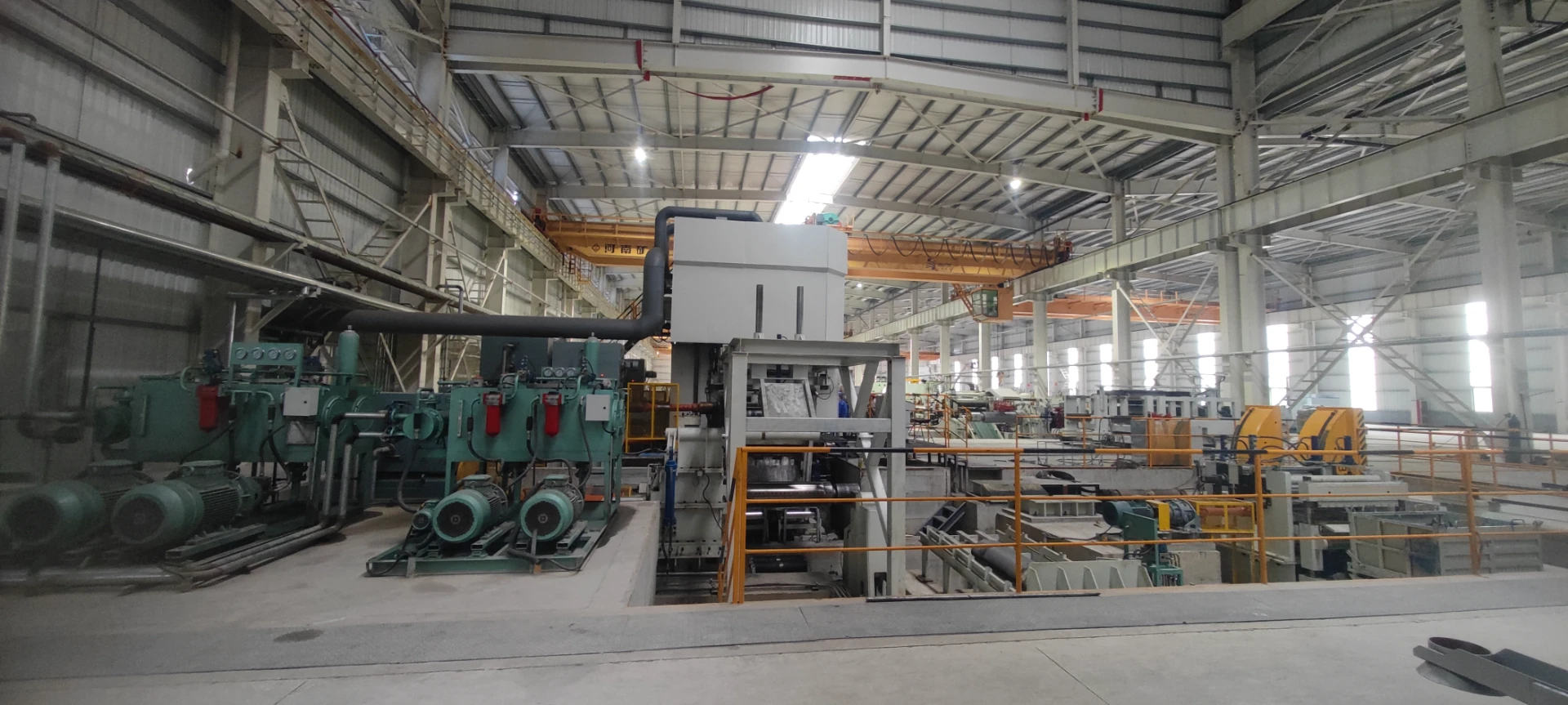
Yang Wang Li Xin operates a state-of-the-art facility over 66,000 square meters,and our manufacturing facility is fully equipped with high-tech machinery and high-capacity cranes. This enables us to handle large work pieces measuring 4.5m in width, 10m in length, and 1.5m in height, guaranteeing our capacity to produce 1800mm skin-pass mills and 1450mm rolling mills. The individual piece can weigh up to 100 tons.

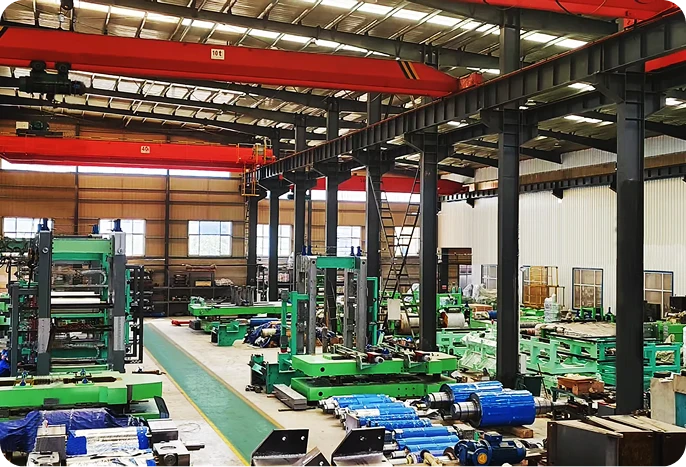

Quality is fundamental to the enterprise survival. We have established a comprehensive and meticulous quality management system and have successfully obtained ISO14000 certification. Starting from the design source, it supervises the entire production cycle, including design, procurement, processing, assembly, in-factory testing, installation, and online commissioning. The workshop is equipped with measuring tools like vernier calipers, spectrometers, hardness testers, and ultrasonic flaw detectors. They are used to check materials and control tolerances to ensure the final equipment meets or exceeds requirements. All products have a unique code, This enables the easy identification and traceability of the equipment components and ensures full control of quality.


-
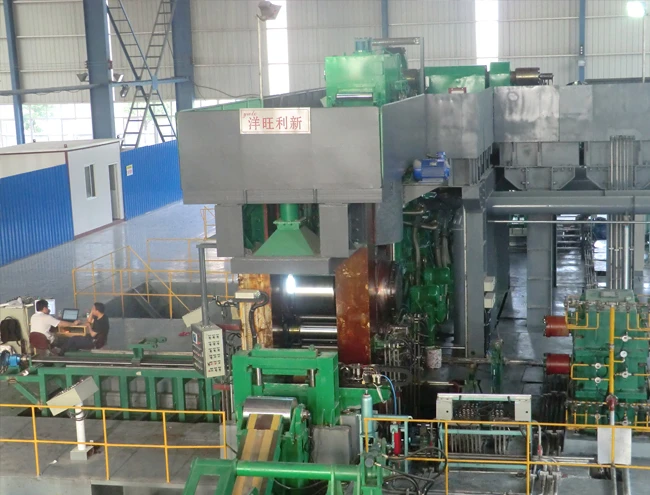 مطحنة درفلة مستعملةExploring the realm of used rolling mills can be an enlightening journey for industry professionals and entrepreneurs seeking cost-effective solutions without compromising on quality. Used rolling mills, known in Arabic as مطحنة درفلة مستعملة, offer a distinctive opportunity to harness the prowess of this pivotal machinery while maintaining a keen eye on budget considerations. Experience resonates
 -
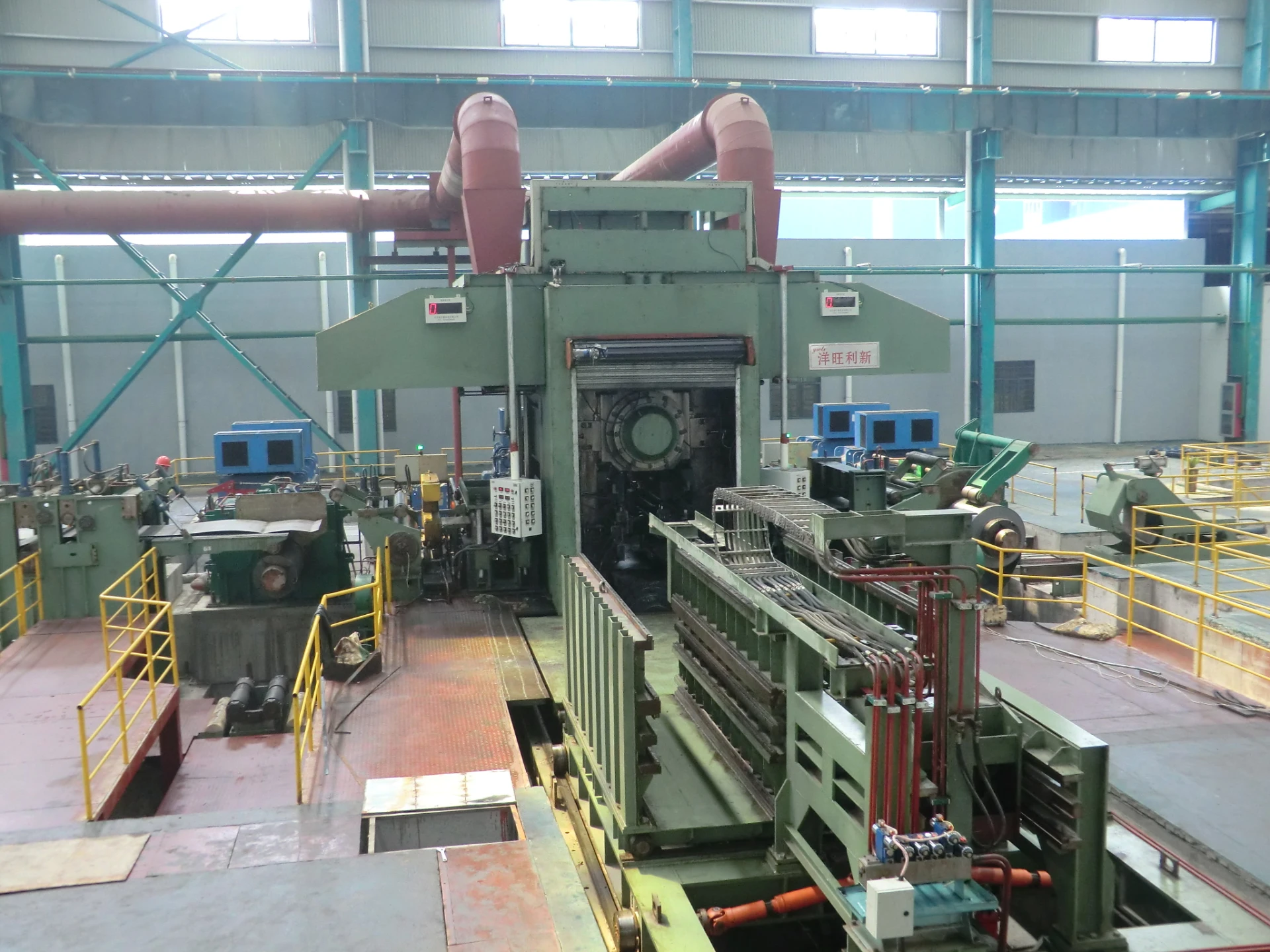 Optimal Temper Rolling Mill for High-Quality SteelUnderstanding the Modern Temper Rolling Mill in Advanced Metallurgy The temper rolling mill , often referred to as a temper pass mill or skin pass mill, is a crucial component in the production of high-quality flat-rolled steel products. Its primary function is to impart specific mechanical properties and surface characteristics to cold-rolled steel strips, making them suitable for demanding downs
 -
 rollende ZellenПрокатные клети, или Walzgerüste, sind unverzichtbare Komponenten in der metallverarbeitenden Industrie, die durch ihre Vielseitigkeit und Effizienz bestechen. Sie spielen eine Schlüsselrolle bei der Umformung von Metallen, indem sie diese durch ein System von Walzen zu Blechen, Profilen oder Drähten verarbeiten. Diese Maschinen sind sowohl in einer Vielzahl von Konfigurationen als auch in untersc


